Roundtable 2025
Reclaiming Expertise: Community, Culture, and Credibility in Youth Defense
Join California’s youth defense community for a Roundtable that sets a new standard.
This two-day training at UC Law San Francisco will challenge everything you think you know about expertise. We’re redefining what it means to get, have, and be an expert in youth defense- centering voices with deep community roots, expansive knowledge, and real courtroom insight. Come ready to disrupt the status quo and help build a statewide movement that’s been long overdue.
Event Logistics
Register today to advance your practice!
- Can’t attend both days? 1-day and 2-day ticket options are available. 1-day tickets grant access to Roundtable on either Friday or Saturday.
- Friday’s program begins at 9:45 am and includes a full day of trainings and collaborative workshops. Breakfast will be available starting at 9:00 am and is first come, first served.
- Our Saturday Program begins at 9:00 am with a spoken word performance and a full day of training sessions. Breakfast will be available starting at 8:00 am and is first come, first served.
For any questions or issues, please contact the CYDC team at info@cayouthdefenders.org.
CYDC’s Annual Roundtable 2025 will be held at UC Law San Francisco. The school boast several, newly-renovated buildings and classrooms to host this generative training series! Roundtable check-in will be at: 198 McAllister St, San Francisco, CA 94102
Parking
UC Law SF Garage at 376 Larkin St. Click here for parking info and rates.
Civic Center Garage at 355 McAllister St. More details at Civic Center Garage.
BART / Public Transit
If you are traveling from within the Bay Area, we strongly encourage the use of public transportation. UC Law San Francisco is located directly adjacent to the Civic Center/UN Plaza BART and Muni stations, providing easy and direct access to the venue.
2-day attendees are eligible for up to 12 hours of MCLE credits. Certificates of Attendance will be distributed within 7 days after Roundtable.
CYDC certifies that this activity conforms to the standards of approved education activities prescribed by the rules and regulations of the State Bar of California governing Minimum Continuing Legal Education.
Unless otherwise noted, these trainings are intended for members of the youth defense community only, including attorneys, investigators, social workers, paralegals, mitigation specialists, law office professionals, and other job roles on defense teams.
We’ve launched the official CYDC Bonfire store featuring our line of Defending Futures, Transforming Systems t-shirts, long sleeves, and hoodies! By purchasing a shirt, you are directly supporting our work and showing your commitment to defending youth rights.

Friday, September 12th
For the first time, we’re kicking off Roundtable with a full day of hands-on, skills-based training. With two dedicated tracks- one for defenders and one for social workers- Friday is all about sharpening your tools, building community, and making space for creative, grounded advocacy.
Tracks:
Defender’s Toolkit Track (DTT)
Whether you’re new to youth defense or looking to sharpen your edge, this track is all about building strong, strategic, and creative courtroom skills. Through advanced presentations and interactive breakout sessions, we’ll revisit the essentials- detention advocacy, case theory, interviews, and more- with a fresh lens and practical tools you can use in any jurisdiction. It’s back to the basics, but with better snacks, smarter strategy, and maybe the most fun you’ll have all year in a training.
Social Worker Track (SWT)
Every client has a story—and it’s more than a case file. It’s a life touched by systems, shaped by adverse experiences, and deserving of a voice. Whether you’re confident in your report writing or still finding your footing, CYDC invites you to spend a day honing your storytelling skills. Through report writing training and expert breakout sessions, you’ll walk away with new tools, new energy, and deeper connection. Let this day be a reset—a chance to remember why you do this work and to reconnect with the power of telling a story that can change a life.
Day 1 Agenda
9:00 am -9:40 am Breakfast and Registration
9:40 am -9:45 am Welcome Remarks
9:45 am -11:45 am Session 1
This session will focus on how to develop, workshop, and communicate a clear theme & theory to the fact-finder, understanding that telling the story of your client is one of the most powerful ways to get everyone in the room to humanize, rather than villainize.
Speakers:
Roshell Amezcua
 Roshell Amezcua ’14 is the director of Juvenile Justice Clinic (JJC), in which students represent juvenile clients facing criminal charges in Los Angeles County courts. In her role, Amezcua supervises clinical students performing client services in juvenile delinquency matters. Her work includes collaborating with other CJLP clinics.
Prior to joining the JJC as director, Amezcua was a supervising attorney at The Bronx Defenders, a public defender nonprofit that annually represents about 30,000 low-income Bronx residents in criminal, civil, child welfare, and immigration cases. Her role included supervision of incoming law students and experienced attorneys in collaborative training and preparation for all appearances, case conferencing, client management, and caseload management. Previously, she served at the organization as family defense attorney – representing parents charged with abuse or neglect –, and the family defense and immigration counsel developing and conducting trainings across New York State on Padilla-like consequences of dependency proceedings. She also served as a mentor for interns and attorneys of color.
Prior to The Bronx Defenders, Amezcua interned at the Los Angeles County Public Defender’s Office and was a post-bar law clerk at the Orange County Public Defender’s Office Appellate Division. Outside of the courtroom, Amezcua has shared her expertise as a speaker at Loyola’s Journalist Law School, the ABA National Conference on Parent Representation, the National Legal Aid and Defender Association and PLI’s Children’s Law Institute.
Born and raised in Santa Ana, California, Roshell (she/her/hers) identifies as a cis-gendered Latinx mom, partner, sister, and daughter.
Reuben Moreno
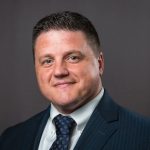 Reuben Moreno is the Supervising Attorney for the Juvenile Division of the Sacramento County Public Defender’s Office. He has dedicated nearly the entirety of his 20-year career in that office to the defense of children. He has tried hundreds of juvenile delinquency cases at all levels of complexity and has served as a Juvenile Trial Attorney, Fitness/Transfer Attorney, Placement Attorney, Non-Minor Dependent Attorney, Juvenile Drug Court Attorney, Division of Juvenile Justice Resource Attorney, Juvenile Writs and Appeals, and the Lead Attorney of the Juvenile Division.
Reuben has litigated many cases in the CA 3rd District Court of Appeals, resulting in several published cases concerning juvenile delinquency. He has spoken at local, statewide and national forums to both defense practitioners and judges on juvenile delinquency related topics including a presentation on Holistic Juvenile Defense Practices to The National Council of Juvenile and Family Court Judges earlier this year. He has served on several workgroups with the Pacific Juvenile Defender Center in the past and is a current Board member on the National Advisory Board for the Western Region of the Gault Center.
Reuben was responsible for creating the SB395/SB203 Juvenile Miranda Advisement Program in Sacramento County, ensuring that attorneys are available 24/7, 365 days a year to go into the field and provide Miranda advisements to children prior to a custodial interrogation. He also helped to create the Juvenile Trauma Response Court (JTRC). JTRC centers on the trauma that children suffer, which in turn results in the behaviors that then bring them before the juvenile court. Starting off as a grant funded pilot program, Sacramento County now fully funds JTRC due to its success.
Unlock the secrets of powerful report writing in this dynamic panel discussion designed for defense professionals in the forensic social work field. From narrative-driven storytelling to clinically grounded reports, our expert panel will explore the pros and cons of each approach and when to use them. Learn the essential questions to ask attorneys, how to structure a compelling and credible report, and when research or expert input is critical. We’ll also tackle one of the toughest dilemmas: how much to discuss when it comes to the crime—or whether to mention it at all. Whether you’re crafting mitigation reports, social histories, or clinical evaluations, this session will sharpen your strategy, elevate your writing, and give you practical tips you can use in your own way.
Speakers:
Erin Brown
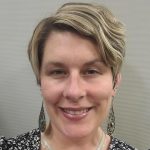 Forensic Social Worker: Erin Brown, LCSW, is a forensic social worker in private practice with over two decades of experience serving justice-involved individuals and families across California. Born and raised in New Orleans, Erin moved to San Francisco at the age of 19. She comes from a proud, three-generation lineage of social workers and considers it a deep honor to continue this legacy through her work. Since 2004, Erin has played a vital role on defense teams, providing comprehensive social history reports, rehabilitative disposition and sentencing recommendations and reentry planning for incarcerated individuals. She also facilitates workshops grounded in a commitment to equity and human dignity.
Erin holds a B.A. in Sociology, Spanish and Portuguese from the University of California, Berkeley, and a Master of Social Work from California State University, East Bay. Fluent in Spanish, Erin has worked closely with undocumented and system- involved families from Latin America. Her approach is shaped by years of service in community-based organizations, centering cultural humility and client advocacy.
Throughout her career, Erin has contributed to more than 600 legal cases—ranging from juvenile transfer and fitness hearings to Franklin and other complex juvenile and adult matters—across 21 counties in California. She has testified in court over 60 times, providing expert insight rooted in social work values to support young people navigating the justice system. In addition to her direct practice, Erin has volunteered with transformative programs at San Quentin State Prison and co-founded a statewide alliance for independent forensic professionals. She remains passionate about building community, fostering collaboration, and advancing justice through human-centered advocacy.
Lisa Eager
Mitigation Specialist: Lisa Eager is a mitigation specialist, private investigator, and Defense Victim Outreach (DVO) specialist based in Northern California. Areas of specialization include capital and non-capital mitigation, Restorative Justice/DVO, and mitigation for Youthful Offender/Franklin proceedings. She has worked on behalf of indigent individuals at county, state and federal Public Defender agencies throughout the United States. In addition to direct casework, Lisa provides trainings, consultations, and mentoring to the defense community.
Megan Low
 Supervising Juvenile : SW Contra Costa Public Defender Office: Megan has 20 years of experience in client advocacy and social work. She has an extensive background in mental health and worked as a clinician with dually diagnosed transitional aged youth and adults in outpatient and acute crisis treatment programs in San Francisco prior to working in public defense. She is an Associate Clinical Social Worker (ACSW) and has been a forensic social worker in youth defense for nearly 10 years. Prior to joining CCPD, Megan was the senior forensic social worker with the Alameda County conflicts program. Megan has worked on nearly 30 juvenile transfer cases, and supported youth post-disposition at programs including camp, ranch, residential treatment, and DJJ. She is a Steering Committee member of the California Defense Social Workers (CDSW), and co-chairs the CDSW Youth Defense consultation subgroup. She has presented trainings in report writing, boundary setting, and client interviewing, and has co-presented multiple trainings on testifying throughout the state. Additionally, she is a field instructor for MSW student interns at the Public Defender’s Office.
Maria Rodriguez
 Supervising: Social Worker Santa Cruz Public Defender Office: María Rodríguez-Castillo is the Social Work Supervisor in the Holistic Division, where she supervises a team of holistic advocates. María brings over 30 years of experience in nonprofit leadership. She most recently served as the Director of both the Luna y Sol Familia Center and the Alcance Programs at the Community Action Board (CAB) of Santa Cruz County, where she led efforts to support at-promise youth and adults through comprehensive wraparound services. Her work is rooted in community empowerment and equity, and she remains a strong presence in the field, demonstrating a long-standing dedication to social justice. Throughout her professional journey, María has served diverse and often underserved populations, including individuals with disabilities, mental health conditions, survivors of childhood sexual abuse, victims of crime, those causing harm, and those impacted by substance use disorders. Her focus on prevention and reentry has contributed to reducing recidivism and fostering healing pathways for system-impacted individuals and their families. In addition to her work at CAB, María has held roles such as Disabilities and Mental Health Specialist for Encompass Head Start, Executive Director of the Survivors Healing Center, and Independent Living Specialist for the Central Coast Center for Independent Living. Most recently, she completed The Annie E. Casey Foundation’s Juvenile Justice Applied Leadership Network (ALN), a rigorous 18-month program designed to equip leaders to pursue meaningful, youth-centered change within the justice system. María is also certified in several culturally grounded leadership and healing programs, including Joven Noble, Cara y Corazón, Xinachtli, and Girasol Rites of Passage Youth Leadership Development, as well as Evidence-Based Circle Facilitation through La Cultura Cura.
11:45 am – 12:45 pm Lunch Break
12:45 pm – 2:45 pm Session 2
This session will focus on how defenders can use early litigation- particularly probable cause and detention hearings- as opportunities to shape the trajectory of a youth’s case. Presenters will walk through creative and practical strategies for using these hearings to preserve legal issues, build on the defense theory, and advocate for release. The session will highlight how to raise challenges that are often overlooked, while equipping defenders to push back on vague petitions, weak probable cause findings, and unnecessary detention recommendations.
Speakers:
Peggy Huscher
Deputy Public Defender, Office of the Public Defender – El Dorado County: Margaret “Peggy” Huscher graduated from Skidmore College in New York and McGeorge School of Law in California. Following law school, she and her husband lived for three years in Micronesia where she advised the Kosrae State Court on issues such as due process, exclusionary rule, etc. Upon her return to California, she worked as a public defender in Shasta County for approximately 20 years. During that time, she represented clients in every aspect of the public defender practice including but not limited to murders, serious sex cases, general felonies, juveniles, misdemeanors, guardianships, and conservatorships. In 2017, she was named the California Youth Defender’s Center “Defender of the Year.” In 2018, she accepted her dream job in the El Dorado County Public Defender’s office where she exclusively represents juveniles in an office that supports hiring experts and gives her enough time to be creative.
Angela Chang
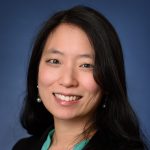 Director, Youth Defense Division, Hamilton County Public Defender: Angela Chang is the Director of the Youth Defense Division of the Hamilton County Public Defender, where she has been a youth defender since 2015. Angela began her legal career representing the criminally accused in both misdemeanor and felony cases as a Deputy State Public Defender for the Office of the Colorado State Public Defender. From 2010 to 2015, Angela focused on youth justice issues at the Children’s Law Center, Inc., where she coordinated youth defense trainings for hundreds of youth defense attorneys, worked on policy reforms, and provided technical assistance and support to youth defense attorneys in the region. Angela has presented on a wide variety of youth defense topics across the country and is a certified Youth Defense Advocacy Program trainer. Angela also sits on the Great Lakes Regional Advisory Board for the Gault Center. Angela lives with her husband and two daughters in Cincinnati, Ohio.
In this dynamic session, you’ll learn how to move beyond dry facts and write reports that truly resonate with decision-makers. Expert Leslie Kirk Campell will share powerful strategies for crafting stories that humanize your client and create emotional connection with judges, district attorneys, and juries. You’ll explore how to paint a vivid, descriptive picture of your client’s life—particularly when telling stories of childhood trauma, adversity, and resilience. Learn how to weave details that humanize the person behind the charges, shifting the focus from labels to lived experiences. By mastering the art of narrative, you’ll discover how to write in a way that not only informs but moves the reader—changing perceptions, fostering empathy, and opening the door to second chances. Whether you are new to the field or years in, this session will give you concrete tools to transform your reports into compelling advocacy that can influence outcomes and change lives.
Speaker:
Leslie Kirk Campbell
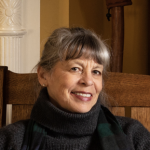 Leslie Kirk Campbell’s short story collection, The Man with Eight Pairs of Legs won the 2020 Mary McCarthy Prize for Short Fiction, is a 2022 Women’s National Book Association Great Group Reads Selection, a finalist for American Book Fest’s 2022 Best Book Awards for Short Story, and a 2022 Foreword INDIES finalist in short fiction. Leslie is also the author of Journey into Motherhood: Writing Your Way to Self-Discovery and has published feature personal essays in San Francisco Chronicle Magazine on teenage gun violence and advocating for public schools. She teaches at Ripe Fruit Writing, a creative writing program she founded in San Francisco in 1991.
Writing school website: http://www.ripefruitwriting.com/
Author link: https://lesliekirkcampbell.com/
2:45 pm -4:45 pm Session 3
Defenders are known problem solvers and skilled at asking questions. Use this session to consider how we might hone our most fundamental skills-interviewing and dispositional advocacy.
Reimagine your dispositional practice, using tangible demonstratives to advocate for the result that your client wants. Reflect on how to co-create defense strategy. Recenter your youth client in an interviewing process that is grounded in adolescent development.
Speakers:
Kristina Kersey
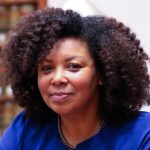 Professor Kristina Kersey joined the University of Tennessee College of Law in 2023, where she teaches in the Advocacy Clinic. Her scholarship focuses on the juvenile carceral system and youth rights.
Professor Kersey brings over two decades of experience in the field of youth defense to UT. Before joining Tennessee, she was Senior Youth Defense Counsel at The Gault Center: Defenders of Youth Rights (formerly The National Juvenile Defender Center), a national nonprofit dedicated to the zealous representation of youth. She facilitated national training on trial skills and wrote creative and informative “Top 10” missives to the national youth defense community including a piece entitled “Jones v. Mississippi, Keeping up with the Joneses: 10 things I kinda maybe don’t hate about Jones.” At the Gault Center, she served as the liaison to the ABA Juvenile Justice Standards subcommittee, led national youth defense technical assistance, consulted on trial and appellate strategy, and was qualified and testified as an expert witness in the field of youth defense.
Prior to joining the Gault Center, she worked for the New Jersey Office of the Public Defender for over 18 years, specializing in youth defense. She was the trial attorney in State in the Interest of N.H. in which the New Jersey Supreme Court held that youth are entitled to full and complete discovery prior to a transfer hearing for adult prosecution. Her advocacy extended beyond the courtroom as she led several statewide initiatives including representation of all detained youth at every hearing including holidays and weekends, expungement assistance for youth clients, and post-disposition advocacy for incarcerated youth. She was a member of the New Jersey Council on Juvenile Justice and System Improvement, a member of the OPD Juvenile Training Committee and was the First Assistant Deputy Public Defender in the Essex juvenile unit prior to her departure from the agency.
Michael Richardson
Expert reports can make or break a case—but only if you truly understand what they are saying. Too often, critical details are hidden behind clinical jargon, technical terminology, and dense language that doesn’t translate easily for judges or juries. In this engaging session, learn how to decode expert reports and turn them into powerful advocacy tools. You’ll learn how to identify what’s important (and what isn’t), translate complex findings into humanizing narratives, and use expert opinions to strengthen your case. By the end of this session, you’ll know how to move from simply reading expert reports to strategically using them to shift perspectives and influence outcomes in your own reports.
Speaker:
Kathy Ho, PhD
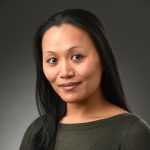 Kathy Ho serves as the Social Services Manager at Disability Rights California, overseeing the social work component of holistic legal services for clients with disabilities since July 2022. Previously, Kathy held the position of Clinical Supervising Social Worker at Stanford Law School from October 2018 to July 2022 and was an Adjunct Clinical Professor of Law at Fordham University School of Law from September 2009 to December 2018, where supervision of MSW interns and co-teaching family advocacy seminars were key responsibilities. Additional roles include Adjunct Advisor at CUNY Kingsborough College, Adjunct Faculty at NYU Silver School of Social Work, Research Intern at the Vera Institute of Justice, and various social work and counseling positions at UCSF Benioff Children’s Hospital Oakland, the Chinese-American Planning Council, Peninsula Hospital, and Children’s Center South. Kathy earned a Doctor of Philosophy in Social Work from New York University and holds both a Master of Social Work from the University of Southern California and a Bachelor of Arts in Psychology from UCLA.
4:45 pm -5:15 pm Day One Wrap Up
The defense community comes back together — let the games begin! It’s time to reflect, debrief, and have some fun unpacking all things day one. Get ready for engaging conversations, lighthearted activities, and meaningful moments as we share insights and highlights from the day. Let’s connect, laugh, and learn together before we dive into Roundtable tomorrow.
Saturday, September 13th
Saturday brings us to the heart of Roundtable- a day rooted in the belief that expertise takes many forms. It’s cultivated through experience, refined through study, and tested in the fight for justice- and the most powerful advocacy happens when we recognize them all as essential equal sources of truth. That includes the expertise young people carry about their own lives.
With three specialized tracks and some of the sharpest minds in the field, this is a day of learning, connection, and strategy you don’t want to miss.
Tracks:
Fundamentals of Youth Defense (FYD)
This track reimagines what “fundamentals” really mean in youth defense. Instead of simply case law refreshers, these sessions take on the gray areas defenders navigate every day but rarely get trained on. How do you develop a credible defense when expert access is limited or delayed? What frameworks help you turn issues like education instability or GPS surveillance into compelling legal challenges? And once an expert is on board, how do you integrate their role into the broader theory of the case- not just as a report writer, but as a strategic asset? This is a full-day training designed to build fluency and sharper instincts across all phases of advocacy.
Social Worker & Mitigation Specialists (SWM)
This track will develop practical strategies to strengthen interdisciplinary teamwork, build mutual respect across professions, and keep the client’s humanity at the heart of every case. These sessions aim to equip legal professionals with a deeper understanding of trauma and its impacts on clients, including best practices for involving trauma experts in the courtroom. We’ll address funding gaps and unpaid emotional labor, as well as the successes and struggles that affect us along the way. We’ll explore types of reports, and the key questions attorneys should be asking social workers and mitigation specialists (and vice versa), and what it really takes to work together.
Specialized Litigation Skills (SLS)
This advanced track is built for defenders handling the most complex, high-stakes youth cases- where systems collide, bias is baked in, and expertise is weaponized. These sessions go beyond technical skills to examine how culture and structural power shape courtroom narratives and litigation strategy. You’ll learn how to challenge prosecution defaults in transfer hearings, expose and disqualify law enforcement presented as experts, and navigate competency issues rooted in cultural misunderstanding and linguistic bias. If you’re ready to litigate at a higher level blending doctrine, social science, and narrative disruption- this track will push your thinking and expand your toolkit.
Day 2 Agenda
8:00 am – 8:45 am Breakfast & Registration
8:45 am – 9:00 am Welcome Remarks
9:00 am – 9:20 am Spoken Word Performance
Roundtable Day 2 launches with the motivational words of poet, writer, mentor, and activist, Bleu Inkk Watkins. Bleu will ground us in a simple truth: Youth are the experts of their own stories. This performance embodies the purpose of this Roundtable, centering voices with deep community roots and expansive knowledge to generate real impact in the courtroom.
Speaker:
Bleu Inkk Watkins
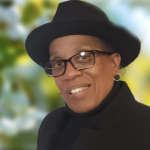 Bleu Inkk Watkins is an Independent Forensic Gang Expert and a visionary artist whose work illuminates the intersections of survival, identity, and systemic harm. A former youth lifer and member of a Compton Crip gang with over 25 years of lived experience, Bleu now serves as a facilitator and coach with Success Stories, a transformative, peer-led program supporting healing and growth among people impacted by incarceration. Bleu is also the creator and performer of Found Suitable, an autobiographical stage production that explores incarceration, healing, and transformation, and has led performance and arts programming inside prisons across California. Their work sits at the powerful crossroads of cultural credibility and creative resistance.
9:20 am – 9:35 am CYDC Youth Justice Awards
9:35 am – 11:05 am Morning Plenary
Expert forensic psychologist, Dr. Antoinette Kavanaugh, will help youth defenders look beyond standard psych reports. Full training description coming soon!
Speaker:
Dr. Antoinette Kavanaugh
 Dr. Antoinette Kavanaugh is Board Certified in Forensic Psychology and is the former Clinical Director of the Juvenile Justice Division of the Cook County Juvenile Court Clinic. She has been a clinical professor at Northwestern University’s School of Law and a Lecturer at Northwestern University’s Feinberg School of Medicine. She is an alumnus of the American Psychological Association’s Leadership Institute for Women in Psychology and is a Fellow of APA’s Division 42, Psychologists in Independent Practice. She has authored several peer-reviewed articles and routinely educates lawyers and psychologists on issues related to adolescent development and obtaining and conducting forensic evaluations. In private practice since 1999, she evaluates juveniles and adults in criminal and civil cases and testifies regularly in state and federal court. With Dr. Thomas Grisso, Dr. Kavanaugh co-authored Sentencing Juveniles in Adult Court, a book published by Oxford University Press. This book, written for mental health clinicians conducting de facto life or Miller sentencing evaluations, details a developmentally sensitive approach to these unique evaluations. In 2025, Dr. Kavanaugh received the Outstanding Clinical Mentoring for the Elimination of Racial, Ethnic, and Cultural Disparities Award from the American Psychology Law Society, a division of the American Psychological Association.
11:05 am – 11:15 am Break
11:15 am – 12:15 pm Breakout 1
Retaining an expert is just the beginning. What you do next can determine whether their testimony strengthens your case or leaves it vulnerable. This session dives into the real work that begins after you’ve identified an expert – setting expectations through a strong referral letter, avoiding pitfalls through early, candid conversations, and providing information in a way that serves your strategy without undermining it. We’ll explore how to decide whether your expert should testify or work behind the scenes, when to separate the role of report writer from witness, and how to navigate the risks and rewards of combining the two. You’ll leave with practical approaches for reviewing and discussing reports, preparing your expert for testimony, and building a partnership that maximizes their value while protecting your case.
Speakers:
Sean Kennedy
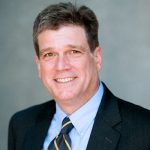 In fall 2014, Sean Kennedy ’89 joined Loyola Law School as the Kaplan and Feldman Executive Director of its Center for Juvenile Law and Policy (CJLP).
Prior to this appointment, Kennedy was the Federal Public Defender for the Central District of California from 2006 to 2014 and has also served as Chief of the Federal Public Defender Capital Habeas Unit.
As an adjunct professor for more than 15 years, Kennedy has taught Appellate Advocacy and the Death Penalty Law Seminar at the Law School. He has coached the Byrne Trial Advocacy Team – himself a member of the Scott Moot Court Honors Board as a student. Additionally, he serves on the board of Loyola’s Advocacy Institute.
In 2013, Kennedy was named Criminal Defense Attorney of the Year by the Los Angeles County Bar Association and received the Fidler Institute Award for Defense Lawyer of the Year from Loyola. He is a recipient of the Public Interest Award by Loyola’s Public Interest Law Foundation. Prior to working in public defense, Kennedy was an associate at Talcott, Lightfoot, Vandevelde, Woehrle & Sadowsky, LLP, where he handled white collar criminal defense cases.
Manuel St Martin
-
The new detention/SYTF landscape,
-
How to empower and enhance engagement with this population,
-
How to build and effectively engage as a defense team, and
-
How to advance collaborative advocacy and strategic partnerships toward best outcomes.
Speakers:
Julia Arroyo
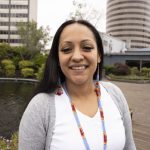 Julia Arroyo is the Executive Director of Young Women’s Freedom Center (YWFC) and a tireless advocate for marginalized communities, with over two decades of experience in community health, reproductive justice, rape crisis intervention, and supporting sexually exploited youth. Since joining YWFC in 2014, she has led the organization’s expansion across California, including in Santa Clara County, Oakland, Los Angeles, and Contra Costa County, while ensuring that healing and leadership development remain central to its mission.
Nationally, Julia provides technical support to initiatives with global impact, including collaborations with the United Nations and statewide programs in Nebraska, Oregon, New Mexico, Washington D.C., Hawaii, and California. A significant part of her policy work focuses on ending the incarceration of women, girls, and trans youth of all genders in California, transforming systems of oppression, and advocating for reproductive justice.
Julia’s reproductive justice efforts are grounded in her belief that all individuals, particularly women, girls, and trans youth, deserve autonomy over their bodies, access to healthcare, and the freedom to make decisions about their futures. She works at the intersection of reform, abolition, and reproductive justice, addressing the unique reproductive health needs of incarcerated women and youth while advocating for policies that protect their rights and end their imprisonment.
As a second-generation Xicana of Mexican and Filipino descent, Julia brings a deeply personal connection to her work. Having experienced the foster care system, underground street economy, and incarceration herself, she is dedicated to transforming systems that harm marginalized girls and helping them escape both systemic and interpersonal violence. Julia is a healer in the Mexica tradition and a student of Pedagogy of the Oppressed and is pursuing a degree in Women’s Studies at San Francisco City College while leading efforts to empower the next generation.
Lana M. Kreidie
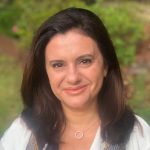 Lana M. Kreidie is the Assistant Director of Santa Clara County’s Independent Defense Counsel Office, a program that oversees and administers a conflict panel of defenders appointed to represent system involved youth and adults. Lana spent the first 11 years of her defender career serving as a deputy public defender in Riverside County and the next 5 years as a solo holistic youth and criminal defense practitioner in the Bay Area. Before joining Santa Clara County’s executive management team, Lana served as the Administrator of the Delinquency Panel with the Bar Association of San Francisco and as an Assistant Managing Attorney with San Mateo County’s Private Defender Program. Over the years, Lana has trained defenders locally, statewide and nationally on a variety of youth defense topics, has participated in a variety of legal reform efforts, and is active with youth and criminal justice organizations such as CJCJ, San Mateo CASA, CPDA, and CYDC.
Full training description coming soon!
Speaker:
Chuck Denton
Charles Denton has been an attorney with the Alameda County Public Defender for more than 28 years. Nearly all of that time has been spent in the courtroom. Mr. Denton has litigated thousands of motions and hearings and has tried nearly every kind of criminal case — from drunk driving to the death penalty. He is a frequent lecturer on trial practice and one of the state’s leading experts on criminal law and procedure. He is the co-author of Criminal Defense Jury Instructions (Knowles Publishing) and one of the original authors of California Continuing Education of the Bar’s Recent Developments in Criminal Law Practice and California Criminal Law: Procedure and Practice. His articles, practice guides and case law reviews have also been highly acclaimed and widely published. He is on the Board of Governors for the California Public Defender’s Association. This is Mr. Denton’s 14th year teaching at Berkeley Law.
12:15 pm – 1:15 pm Lunch Break
1:15 pm – 2:15 pm Breakout 2
In this session, we will talk about the challenges young people face when ordered to wear an ankle monitor, including the unique challenges for young people with disabilities. This session will be highly interactive and aims to equip defenders with specific strategies to argue against the imposition of monitoring in the first place, or to lessen the harms that flow from monitoring, as well as related conditions (such as house arrest, searches, drug testing, etc).
Speaker:
Kate Weisburd
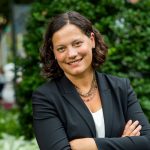 Kate Weisburd is a Professor of Law at UC Law SF whose work focuses on criminal procedure, civil rights, and the impact of emerging technology on privacy and inequality. Her work on electronic monitoring, including the award-winning articles Punitive Surveillance and The Carceral Home, have been published in leading law reviews and recognized nationally. These articles analyze the legal and real-world harms of electronic monitoring, including its impact on privacy, inequality, and daily life. Before joining UC Law SF, Professor Weisburd was a tenured professor at George Washington University School of Law, where she twice received the Distinguished Faculty Service Award. She previously founded and directed the Youth Defender Clinic at the East Bay Community Law Center, supervising law students representing youth in juvenile court and school discipline proceedings.
Whitney Rubenstein
 Whitney Rubenstein practices both law and social work, and is the Director of the Social Work Practice at the East Bay Community Law Center (EBCLC) where she oversees staff, and graduate level social work and law student interns, in the provision of holistic representation to clients of EBCLC. Whitney’s legal work at EBCLC focuses on advocating for young people being pushed out schools and into the juvenile legal system. She engages in a full range of litigation, representing clients in expulsion hearings, special education proceedings, and in juvenile court. Whitney began her legal career as an Equal Justice Works Fellow at EBCLC. During her fellowship, she worked with families at the intersection of the public housing and juvenile justice systems, where she represented youth in juvenile court and their families in housing matters both in civil court and in administrative hearings. Prior to attending law school, Whitney was a Staff Social Worker at the Center for Family Representation in New York.
You may already know about Adverse Childhood Experiences (ACES) and their profound impact on development and behavior—but childhood is only part of the story. Trauma doesn’t occur in isolation; it is shaped by the communities we live in, the cultural messages we receive, and the environmental conditions we endure. This session goes beyond the traditional ACE framework to explore Adverse Community Experiences (violence, poverty, systemic racism), Adverse Cultural Experiences (discrimination, cultural shame, intergenerational trauma), and Adverse Environmental Experiences (unsafe neighborhoods, environmental toxins, housing instability). Learn how these broader adversities intersect with childhood trauma, influence lifelong outcomes, and show up in the lives of the clients and communities you serve. Walk away with a deeper understanding of how to identify, discuss, and integrate these overlooked experiences to find the right experts and to tell your client’s story.
While the Adverse Childhood Experiences (ACEs) framework has raised important awareness of trauma, childhood trauma is complex and can have significant long-term effects on legally involved youth and families. This workshop aims to equip legal professionals with a deeper understanding of trauma, its impacts on clients, and practical strategies for integrating trauma experts within legal processes and practice settings, including best practices for involving trauma experts in the courtroom.
Speakers:
Jeanne McPhee
 Jeanne McPhee is a licensed psychologist and a researcher in the Juvenile in Justice Behavioral Health lab at UCSF. She has a PhD in Clinical Psychology from Drexel University with a focus in forensic and child and adolescent psychology. She has extensive experience delivering trauma-focused therapies to legally involved youth and families and is nationally certified in Trauma-Focused Cognitive Behavioral Therapy. Her research focuses on promoting positive outcomes for legally involved youth by adapting and implementing evidence-based treatment and policies for youth, their families and communities, and within the larger systems that they come into contact with, such as probation systems. Much of her research has been conducted at the systems-level to understand and integrate what legal system practitioners like probation officers and judges and legal teams think about policies and practices that specifically acknowledge and harness the strengths of adolescents, given where they are with brain and social development.
Youth are fundamentally different from adults, and their competency issues are too. This training will explore how incompetency is a much broader concept in juvenile court and will highlight the ways competency issues can manifest beyond obvious mental health disorders, developmental disability, and developmental immaturity. It will address how to spot more nuanced or complex competency issues and how attorneys and forensic experts can effectively communicate about such issues. It will provide tips and strategies for effective, two-way communication that involves learning and sharing information across our separate disciplines and areas of expertise. We will cover how such effective communication can yield remediation recommendations that keep youth out of unnecessarily prolonged competency proceedings and inappropriate competency “training” programs. We will also cover how to effectively address and litigate against an expert opinion that leaves you with doubts.
Speakers:
Dr. Kelline Hiday
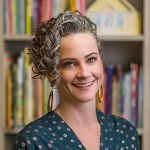 Dr. Kelline Hiday holds a Master’s degree in Professional Mental Health Counseling, with an emphasis in marriage and family counseling as well as being a Registered Play Therapist. Dr. Hiday received her Doctoral degree in Clinical Psychology from Alliant International University while simultaneously completing a certification in Infant/ Preschooler Mental Health. She completed her Pre-doctoral Internship at a local community mental health agency where she served diverse populations with services ranging from individual, group, and family therapy, psycho-education parenting classes, and psychological assessments.
Dr. Kelline Hiday’s clinical experiences range from supporting women domestic violence survivors and their children, working as a mental health consultant for a federally-funded early-intervention preschool, providing school-based mental health services to staff, students and their respective family members, as well as various private practice settings. Dr. Hiday also has experience performing diagnostic assessments, to include both cognitive and academic skill based, in conjunction with both the local Regional Center and local non-profit early intervention agency.
Dr. Hiday volunteers her time speaking at community engagements regarding the impact of children’s mental health issues. Dr. Hiday’s special interest include helping children and families alike navigate the windy road of mental health, particularly as it impacts social and academic performance, and the intersection of mental health and juvenile delinquency.
Over the course of her training and clinical experience as a registered play therapist, Dr. Hiday has used therapeutic interventions which have included talk and play therapy. She has developed specialized skills in assessing, intervening and providing parenting support to those who are diagnosed with Attention Deficit Hyperactivity Disorder (ADHD). She is also certified in mother/ infant mental health which supports her growing practice involving parenting and parent advocacy. Dr. Hiday also treats children and adolescents who present with emotional problems working with those who suffer from anxiety, depression, and other more complex mental disorders. Finally, as Dr. Hiday has completed research related to diagnosing and treatment of ADHD she has developed highly effective approaches to working with children and adolescents diagnosed with ADHD.
Stephen Hirsch
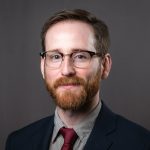 Stephen has worked as an assistant public defender in Sacramento for more than 9 years and has spent over half of that time as a juvenile defender. Currently, Stephen serves as a research attorney dedicated to the juvenile unit while also representing clients committed to and discharged from Sacramento’s secure youth treatment facility and clients in competency proceedings. Stephen co-chairs PJDC’s Legislative Committee and serves on PJDC’s Advisory Board. Stephen earned his B.A. from Stanford University and his J.D. from Washington University in St. Louis.
2:15 pm – 2:25 pm Break
2:25 pm – 3:25 pm Breakout 3
In high stakes cases, such as Juvenile Transfer Hearings & Secure Youth Treatment Facility (SYTF) litigation, defenders often face the challenge of moving forward without the benefit of a formal expert. This session explores how to continue building strong, persuasive cases by tapping into credible community knowledge, crafting narratives grounded in lived experience, and using creative advocacy tools that carry weight in the courtroom. Participants will leave with concrete strategies for presenting powerful, context-rich arguments that don’t rely solely on traditional expert testimony — and a deeper understanding of how community-rooted advocacy can shift outcomes in high-stakes cases.
Speakers:
Sajid Khan
 Sajid A. Khan is a San Jose native and a first-generation Muslim, Indian-American attorney, writer, and civil rights advocate. He earned his Bachelor’s degree from UC Berkeley and his Juris Doctorate from UC Law SF. Since beginning his public defense career in 2008, Sajid has served for over 16 years as a Santa Clara County Deputy Public Defender and Alternate Public Defender. He is an award-winning advocate, honored with “The Heart of the Office Award” in 2016 for his service to the community and the CACJ Skip Glenn Award for Excellence in Advocacy in 2020. Throughout his career, Sajid has fought against mass incarceration, defended constitutional rights, and worked to uphold the dignity of all people he represents.
Raj Jayadev
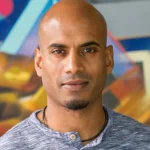
Raj Jayadev is a nationally recognized community organizer and criminal justice reformer based in San Jose, California. He earned his B.A. in Political Science from UCLA and co-founded Silicon Valley De-Bug in 2001, a multimedia and organizing platform for underrepresented voices. Through De-Bug, he launched the Albert Cobarrubias Justice Project, pioneering the participatory defense model—a community organizing framework that empowers families to actively participate in defense strategies and shift power within court systems. His leadership in this work earned him a MacArthur Fellowship in 2018, and his efforts have been featured in The New York Times, The Atlantic, NPR, PBS, and other national outlets.
Every attorney, social worker, and mitigation specialist offers a key piece of the puzzle. When we join forces, the client’s story becomes one that moves hearts and minds. This panel brings together defense attorneys and social workers who work side by side in the trenches of public defense. They may speak different professional languages and wield different tools, but they share one mission: fighting for dignity, fairness, and better outcomes for clients. Whether you’re holding it down in a busy office or navigating the work solo on a professional ‘island,’ both roles come with their own wins, woes—and let’s be real—money challenges. We’ll address funding gaps and unpaid emotional labor, as well as the successes and struggles that affect us along the way.
We’ll explore types of reports, and the key questions attorneys should be asking social workers and mitigation specialists (and vice versa), and what it really takes to work together across disciplines. Panelists will share insights on how to effectively utilize social workers’ and mitigation specialists’ expertise to tell the full story of a client’s life—beyond the charges. We’ll also dive into the hard conversations: What happens when reports are misunderstood or dismissed? How do we build mutual respect despite different training, language, and timelines?
Get ready for honest insights, a few good laughs, and real stories from the field that reveal how collaboration—not competition—builds stronger, more human-centered advocacy. Whether you align with “file the motion” or “what happened to you?”, this panel invites you to rethink roles, break silos, and embrace the power of working together. You’ll leave with practical strategies to strengthen interdisciplinary teamwork, build mutual respect across professions, and keep the client’s humanity at the heart of every case.
Speakers:
Lisa Eager
Lisa Eager is a mitigation specialist, private investigator, and Defense Victim Outreach (DVO) specialist based in Northern California. Areas of specialization include capital and non-capital mitigation, Restorative Justice/DVO, and mitigation for Youthful Offender/Franklin proceedings. She has worked on behalf of indigent individuals at county, state and federal Public Defender agencies throughout the United States. In addition to direct casework, Lisa provides trainings, consultations, and mentoring to the defense community.
Don Le
 Don Le has been a social worker since 2012, beginning his career in Child and Adult Protective Services. In 2018, he joined the Santa Clara County Public Defender’s Office, focusing on clients facing severe mental health challenges.In addition to his work at the Public Defender’s office Don volunteers his time on the steering committee for CDSW, a statewide group of forensic social workers and mitigation specialists working in the defense field. Don is passionate about meeting people where they are and believes the heart of social work and mitigation lies in empowering clients, especially when the odds feel stacked against them.
Damian Spieckerman
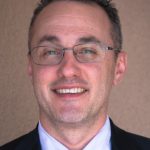 Mr. Spieckerman works in the juvenile delinquency unit of the Solano County Public Defender’s Office. He has spent half of his 15 year public defender career handling juvenile delinquency cases. In addition to his juvenile delinquency caseload, he also handles Youthful Offender Parole Hearing (SB 9/261/Franklin) cases for his office. Mr. Spieckerman is a commissioner on the Solano County Juvenile Justice Commission and frequently represents the Solano County Public Defender’s Office at county-wide and regional juvenile justice events. Mr. Spieckerman is a San Francisco Bay Area native, and graduated with Honors from Pitzer College with a bachelor’s degree in International Relations. Then, after graduating from UC Davis School of Law, King Hall, he began working as a deputy public defender in Mendocino County. Mr. Spieckerman has been practicing in Solano County since 2005. He lives in Alameda County with his amazing wife and their two rambunctious children.
Shannon Wentworth
 Shannon Wentworth is the director of SJCL’s BREN Clinic, advocating for special needs kids from Kern County to Madera County. She also teaches Legal Methods. Wentworth graduated from SJCL in 2019, earning 4 Witkin Awards for Academic Excellence, the Hugh Goodwin Scholarship, the Elizabeth O’Neill Scholarship (twice), Ibarra / Casillas LawSUIT Scholarship, Association on Indian Affairs Florence Young scholarship, American Indian Graduate Institute fellowship, and the Loomis Legacy Medal of Distinction. She was an associate attorney at Mugridge Law Firm before starting her solo practice, Wentworth Law Firm, specializing in post-conviction criminal defense. She also volunteers with the Project First Step Clinic at Central California Legal Services. She was an instructor at CSU, Monterey Bay, and Hartnell Junior College. She has served on the boards of the North Fork Rancheria Indian Housing Authority, North Fork Rancheria of Mono Indians Election Board, International Gay and Lesbian Travel Association Foundation, and San Francisco LGBT Center. She is the former CEO of Sweet, a groundbreaking lesbian travel company.
Prior to studying the law, Shannon had a long career in journalism, marketing, and travel, holding numerous management positions. Drawn to criminal law by the growing injustice in its execution, Shannon’s main goal is to ensure that every defendant receives a top-notch defense in accordance with the California and United States Constitutions. Additionally, Shannon worked as a temporary independent hearing officer for the City of Fresno from 2018 to 2020, deciding disputes between citizens and the City of Fresno over municipal citations.
In juvenile court transfer proceedings, expert testimony can be decisive- especially when it comes from a qualified clinical psychologist- but only if the expert meets professional standards and their work is used strategically in court. This session combines the perspectives of seasoned evaluators and attorneys to give you the full picture: what an ethical, well-founded transfer evaluation should look like, how to recognize when an evaluation falls short, and how to either leverage its strengths or dismantle its weaknesses in litigation. From understanding appropriate tools and evaluator qualifications to developing strategies, you’ll leave with the insight and tactics needed to turn evaluations into powerful tools for your defense.
Speakers:
Anna Kafka
 Dr. Kafka is a licensed forensic psychologist in California (PSY24026) with over 15 years of experience conducting forensic evaluations, providing expert witness testimony and trial consultation, and supervising early career forensic psychologists. She is passionate about elevating the quality of forensic evaluations provided to attorneys and the courts. She enjoys training and consulting with attorneys to help them identify the strengths and weaknesses of forensic psychological and psychiatric reports brought before the court. She also enjoys training students and other mental health professionals in forensic evaluation and report writing, as well as in providing expert witness testimony.
Dr. Kafka’s areas of expertise include assessment of adults on matters relating to criminal responsibility, violence risk, sexual violence risk, suitability for community placement/treatment (including mental health diversion), and competency to stand trial, as well as the creation of psychosocial profiles for the purposes of Franklin proceedings, sentence mitigation, and other legal matters.
Anne McBride
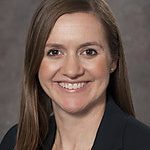 Dr. Anne McBride is a child and adolescent forensic psychiatrist at the University of California, Davis. She is the Vice Chair of Outpatient and Community Clinical Services, Division Chief of Child and Adolescent Psychiatry at UCD, Program Director of the Child and Adolescent Psychiatry Fellowship at UCD, and a Professor of Clinical Psychiatry. Her primary clinical work is at the Sacramento County Child and Adolescent Psychiatric Services clinic and the Child Behavioral Health Center. Her primary forensic work involves consultation and evaluation of juveniles involved in the juvenile legal system. She is a former recipient of the John F. McDermott Assistant Editor-In-Residence for JAACAP and editor of JAACAP Connect, and current Assistant Editor for the JAACAP Journal Club. She serves as co-chair for the American Academy of Psychiatry and the Law Child and Adolescent Psychiatry and the Law Committee.
Michael Whelan
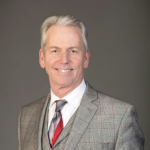 Michael Whelan has practiced law for over four decades, specializing in criminal and juvenile defense across multiple jurisdictions including California, Colorado, New York, and the District of Columbia. He has served on prominent defense panels such as the San Francisco Superior Court Juvenile Homicide-Transfer Panel and the Federal CJA Panels in both Colorado and the Northern District of California. His reported case, U.S. v. Khan, resulted in the suppression of statements in a high-profile terrorism prosecution. Beyond litigation, Mr. Whelan has been a sought-after faculty presenter, leading trainings on juvenile transfer hearings, investigation of juvenile cases, and health care fraud. He earned his B.A. in Psychology with honors from Cal State Sonoma and his J.D. from the University of San Francisco School of Law, graduating in the top quarter of his class.
3:25 pm -3:35 pm Break
3:35 pm -4:35 pm Afternoon Plenary
Earlier in the day, we dug into the mechanics of working with experts- how to prepare them, integrate their findings, and anticipate courtroom dynamics. Now, we’re taking a step back to look at the bigger picture. This closing plenary gathers seasoned experts and a veteran attorney for an open, cross-disciplinary conversation about the realities of expert work in youth defense.
They’ll reflect on the patterns they’ve seen across cases, the moments that made or broke an expert’s impact, and the collaborative moves that set defenders up for success. Expect candid stories, practical wisdom, and a chance to get questions answered on things that don’t always fit into a formal training.
Speakers:
Dr. Antoinette Kavanaugh
Dr. Antoinette Kavanaugh is Board Certified in Forensic Psychology and is the former Clinical Director of the Juvenile Justice Division of the Cook County Juvenile Court Clinic. She has been a clinical professor at Northwestern University’s School of Law and a Lecturer at Northwestern University’s Feinberg School of Medicine. She is an alumnus of the American Psychological Association’s Leadership Institute for Women in Psychology and is a Fellow of APA’s Division 42, Psychologists in Independent Practice. She has authored several peer-reviewed articles and routinely educates lawyers and psychologists on issues related to adolescent development and obtaining and conducting forensic evaluations. In private practice since 1999, she evaluates juveniles and adults in criminal and civil cases and testifies regularly in state and federal court. With Dr. Thomas Grisso, Dr. Kavanaugh co-authored Sentencing Juveniles in Adult Court, a book published by Oxford University Press. This book, written for mental health clinicians conducting de facto life or Miller sentencing evaluations, details a developmentally sensitive approach to these unique evaluations. In 2025, Dr. Kavanaugh received the Outstanding Clinical Mentoring for the Elimination of Racial, Ethnic, and Cultural Disparities Award from the American Psychology Law Society, a division of the American Psychological Association.
Kristina Kersey
Professor Kristina Kersey joined the University of Tennessee College of Law in 2023, where she teaches in the Advocacy Clinic. Her scholarship focuses on the juvenile carceral system and youth rights.
Professor Kersey brings over two decades of experience in the field of youth defense to UT. Before joining Tennessee, she was Senior Youth Defense Counsel at The Gault Center: Defenders of Youth Rights (formerly The National Juvenile Defender Center), a national nonprofit dedicated to the zealous representation of youth. She facilitated national training on trial skills and wrote creative and informative “Top 10” missives to the national youth defense community including a piece entitled “Jones v. Mississippi, Keeping up with the Joneses: 10 things I kinda maybe don’t hate about Jones.” At the Gault Center, she served as the liaison to the ABA Juvenile Justice Standards subcommittee, led national youth defense technical assistance, consulted on trial and appellate strategy, and was qualified and testified as an expert witness in the field of youth defense.
Prior to joining the Gault Center, she worked for the New Jersey Office of the Public Defender for over 18 years, specializing in youth defense. She was the trial attorney in State in the Interest of N.H. in which the New Jersey Supreme Court held that youth are entitled to full and complete discovery prior to a transfer hearing for adult prosecution. Her advocacy extended beyond the courtroom as she led several statewide initiatives including representation of all detained youth at every hearing including holidays and weekends, expungement assistance for youth clients, and post-disposition advocacy for incarcerated youth. She was a member of the New Jersey Council on Juvenile Justice and System Improvement, a member of the OPD Juvenile Training Committee and was the First Assistant Deputy Public Defender in the Essex juvenile unit prior to her departure from the agency.
Manuel Saint Martin
Bleu Inkk Watkins
Bleu Inkk Watkins is an Independent Forensic Gang Expert and a visionary artist whose work illuminates the intersections of survival, identity, and systemic harm. A former youth lifer and member of a Compton Crip gang with over 25 years of lived experience, Bleu now serves as a facilitator and coach with Success Stories, a transformative, peer-led program supporting healing and growth among people impacted by incarceration. Bleu is also the creator and performer of Found Suitable, an autobiographical stage production that explores incarceration, healing, and transformation, and has led performance and arts programming inside prisons across California. Their work sits at the powerful crossroads of cultural credibility and creative resistance.